
At Kriszti and Norbi's wedding, I was present not only as the officiant, but also as the wedding day coordinator, in both Hungarian and English. In this case, bilingualism was not an additional service, but one of the most important foundations for a smooth ceremony.
A couple living abroad, in safe hands
The couple lives abroad, but it was important to them to have their wedding in Hungary, in Budapest.
The venue chosen was the Golden Bastion Hanging Garden, which provided the ideal backdrop for the day with its special atmosphere and panoramic views.
The organizational and coordination discussions took place online in a structured manner.
Despite the distance, every detail was planned precisely: programs, timing, arrivals, transitions, and the coordination of the various ceremonies.
The goal was to ensure that on the wedding day, there would be no questions, no uncertainties—only moments to be experienced.
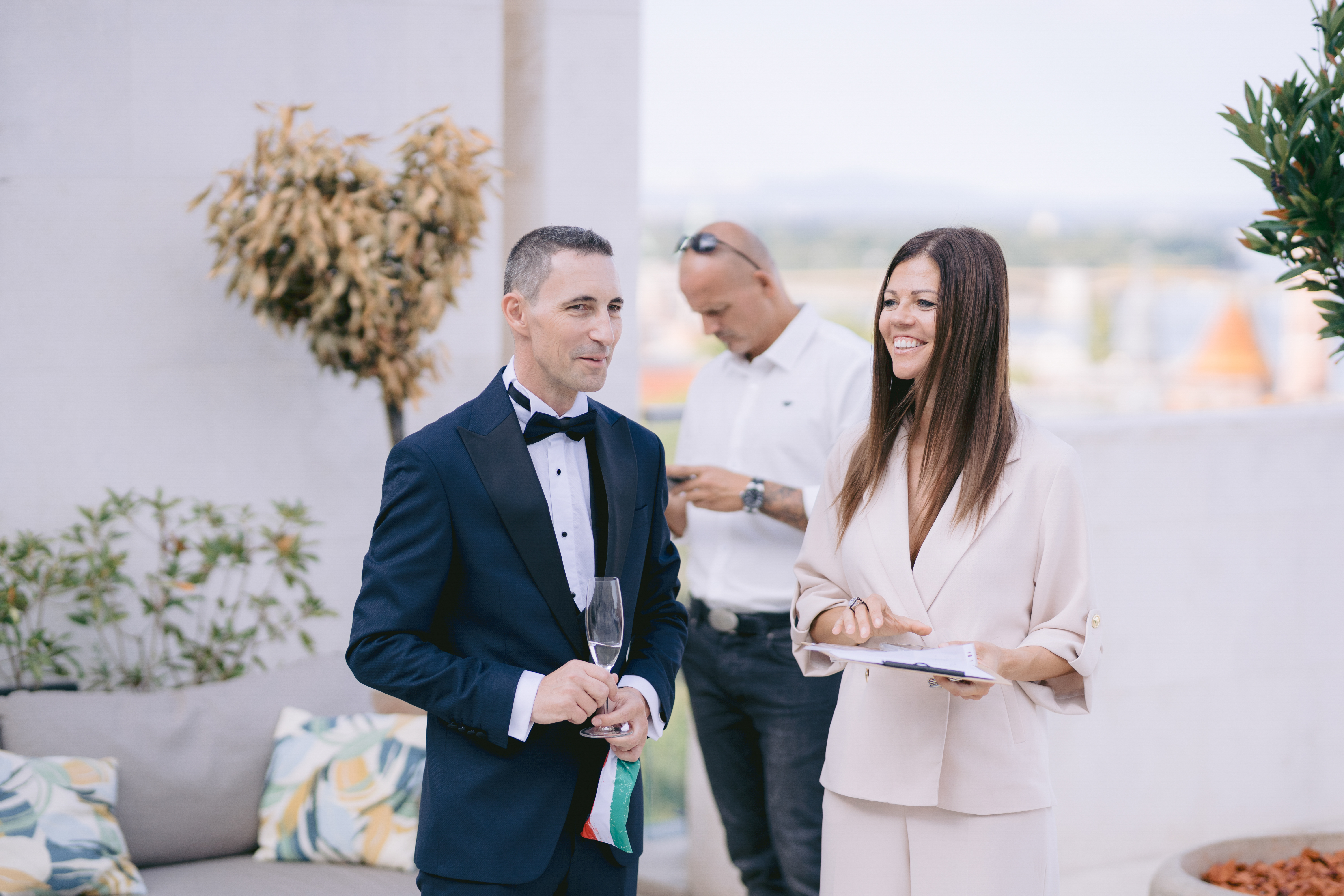
Bilingual coordination in practice
The wedding was attended by Hungarian and foreign guests, as well as English-speaking contributors.
Coordination therefore took place in Hungarian and English throughout, which was key to ensuring accurate communication.
In practice, this meant that:
all guests received clear instructions,
the transitions between ceremonies went smoothly,
the venue and service providers knew the timing and order exactly,
the couple did not have to act as mediators at their own wedding.
Bilingual coordination ensured that everyone understood the same thing, proceeded at the same pace, and that no misunderstandings arose.
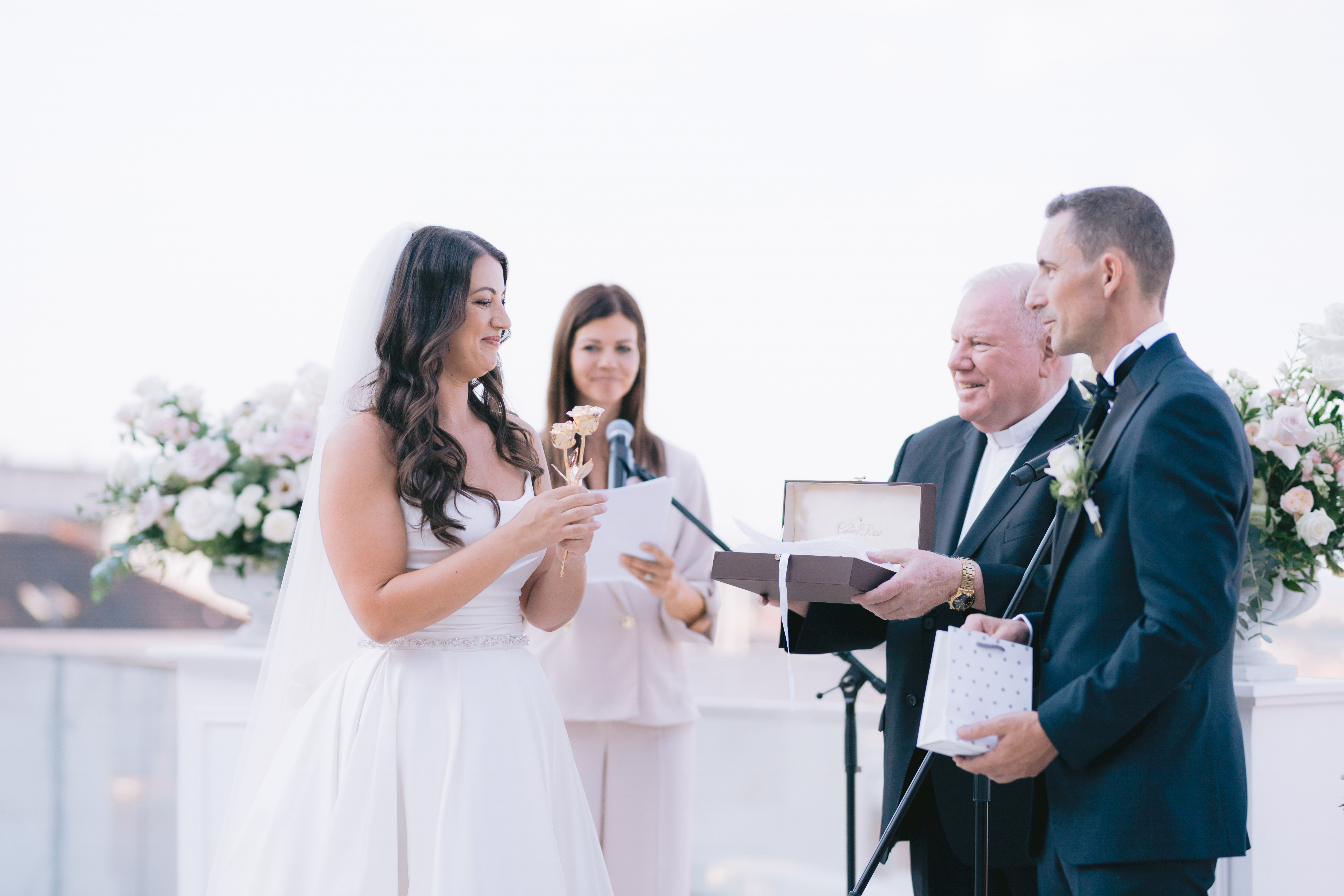
Church ceremony – coordination and translation at the same time
Before the civil ceremony, there was also a church ceremony, led by an English-speaking priest.
In this situation, coordination and language mediation were closely linked.
During the ceremony, my role was to:
coordinate the proceedings,
translate and deliver the English-language parts into Hungarian,
and keep the guests informed.
This allowed the Hungarian guests to participate fully in the event without disrupting or interrupting the ceremony.
Ceremony leadership and coordination – in one hand
I led the civil ceremony in Hungarian and English, then coordinated the entire wedding day process.
When ceremony management and coordination remain in one hand, it offers a significant advantage:
no loss of information,
no unnecessary coordination,
every decision and change can be handled immediately.
At Kriszti and Norbi's wedding, this made it possible for the day to unfold without any tense situations, precisely and yet at a natural pace.
Invisible work, palpable calm
Wedding day coordination works well when the guests and the couple hardly notice it—they just feel that everything is in its place.
The bilingual presence, experience, and well-thought-out structure ensured that this day was truly about Kriszti and Norbi.
Wedding planning, ceremony management, and coordination in Hungarian and English